AdrianaCarpio's Kennel
Tournaments and Special Offers on Donbet UK: How to Turn Every Session into a Competition
The fastest way to make online play feel alive is to add a little rivalry—because the moment you’re chasing a place on a leaderboard, every spin and every hand suddenly matters more. That’s exactly why players keep an eye on tournament calendars and rotating promos, and why platforms like
donbet casino often become a regular stop for UK players who want their gameplay to come with momentum, progress, and that “one more round” energy that only competition creates.
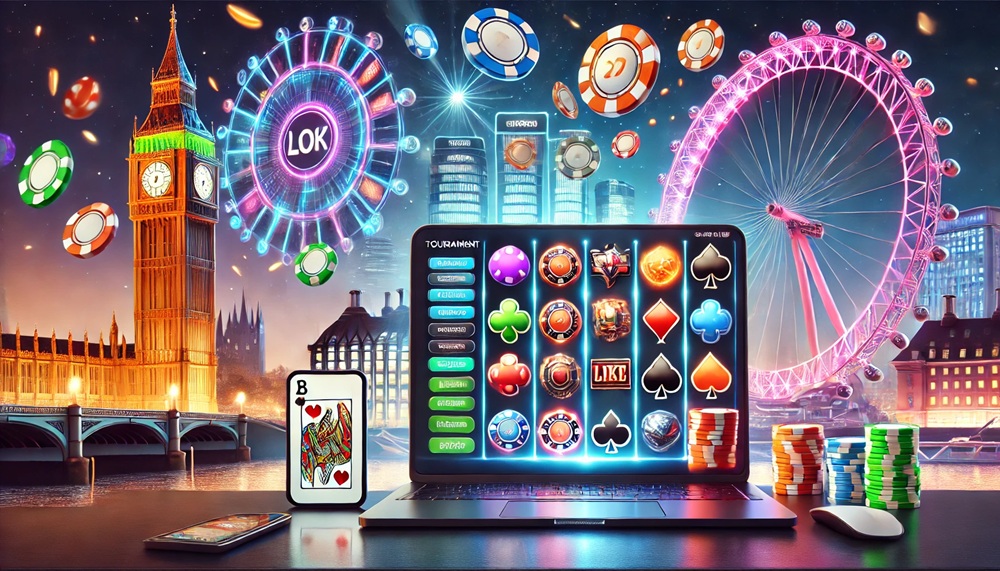
Online casino tournaments have changed the vibe of iGaming in the UK. They’re no longer just background events for high-rollers or hardcore grinders. Today, tournaments are built for all kinds of players: quick daily sprints, weekend marathons, themed events around new releases, and even low-pressure challenges that reward consistency rather than huge single wins. Add special offers on top—things like missions, prize drops, cashback-style mechanics, or time-limited perks—and you get something that feels closer to a season pass in gaming than the classic “log in, spin, log out” routine.
This article breaks down how tournaments and special offers typically work on Donbet UK, what types you’ll most likely run into, how to choose events that match your style, and how to play in a way that stays fun, sensible, and (importantly) not stressful.
Why tournaments are so addictive (in a good way)
At their best, tournaments do three things:
They give you a clear goal. Instead of playing “until you’re bored,” you’re playing toward a target—points, a ranking tier, a milestone, a badge.
They turn variance into drama. A normal session has ups and downs. A tournament session has plot twists: you climb, you drop, you recover, you chase.
They reward engagement, not just luck. Many formats are designed so that steady participation can matter, not only one big moment.
For UK players, the appeal is also practical: tournaments can be short and structured, which fits modern schedules. Ten minutes on a lunch break? That’s enough for a daily sprint. A longer weekend session? Perfect for multi-day leaderboards.
A quick, practical overview of DonBet as a platform (without the hype)
DonBet is built to feel like a complete online casino hub for UK-focused players who want variety and convenience in one place. The main draw is its broad game library: you’re not boxed into a single genre or a tiny selection, so it’s easy to switch moods—slots when you want speed, table games when you want rhythm, and other formats when you want something different. That variety matters for tournaments, too, because competitive events tend to rotate across game types and themes.
Another reason DonBet stands out is the “smoothness factor”: fast navigation, clear game categories, and a layout that makes it easy to find what’s trending, what’s new, and what events are running right now. A lot of players underestimate how much the interface affects their experience—especially in time-limited promotions where you don’t want friction. When a site is easy to move around in, you spend your attention on the gameplay and the challenge, not on hunting for buttons.
(Those are the first two required DonBet-focused paragraphs, intentionally avoiding licensing/bonus claims.)
Tournament types you’ll commonly see (and how they usually score points)
Even when the names vary, most casino tournaments fall into a few recognizable formats. Here’s what they tend to look like and what you should watch for.
1) Leaderboard races (daily, weekly, seasonal)
This is the classic model: play eligible games, earn points, climb the ranking. Points are often tied to stake size, number of rounds, or a combination.
What to check before you join:
Eligible games list: Is it one slot title, a group of slots, or the entire category?
Scoring logic: Are points mainly volume-based, stake-based, or win-based?
Prize distribution: Is it top-heavy (big rewards for top 3) or spread across many places?
Time window: One-hour sprint vs. multi-day grind changes strategy.
Best for: Players who like clear competition and can commit to a structured session.
2) Missions / challenges (progress bars and objectives)
These feel like “quests”:
Spin X times
Hit specific symbols
Play a mix of games
Complete daily tasks for weekly completion
Sometimes they’re personal (your own progress), sometimes semi-competitive (everyone chasing milestones).
Best for: Players who enjoy steady progress and dislike the pressure of being ranked against others.
3) Prize drops and timed prize pools
You’ll see events where prizes “drop” at set intervals to eligible players, or where a communal pool is distributed according to activity.
Best for: Players who prefer lighter competition and want excitement without constant checking of a leaderboard.
4) Game-launch tournaments
When new games arrive, sites often run themed events to push discovery—special leaderboards, missions, or “try it and earn” mechanics.
Best for: Curious players who like exploring new titles and learning patterns early (when the hype is fresh).
5) VIP-style series and long-form seasons
Some platforms run longer “seasons” where points accumulate over weeks. The appeal here is pacing: you can miss a day without losing everything.
Best for: Players who like long-term goals and consistent routines.
How special offers fit into tournament culture
Special offers and tournaments often stack conceptually, even if they don’t literally combine in the rules. The most common “special offer” patterns around tournaments include:
Entry perks: Lower barriers to join certain events or categories.
Reload-style mechanics: Encouraging return sessions during a time window.
Cashback-like features: Softening swings for a period (often with conditions).
Boosters / multipliers: Time-limited point boosts or extra progress on missions.
Themed calendars: Daily deals or rotating mini-events tied to weekends, holidays, or big sports moments.
The big advantage for players is psychological: special offers reduce the “same-ness” of routine play. Instead of every session feeling identical, offers introduce novelty—new goals, new timelines, and new reasons to try a different game.
The smart way to pick tournaments (so it stays fun)
Not all tournaments are equal for you. The best event is the one that matches your preferred pace and risk comfort.
Here’s a simple selection method that works surprisingly well:
Step 1: Decide your “session shape”
Short and intense (10–30 minutes): Choose sprints, quick leaderboards, timed drops.
Medium (30–90 minutes): Choose daily boards, missions, “complete X tasks.”
Long (2+ hours across days): Choose weeklies, seasons, cumulative races.
Step 2: Choose the prize structure that won’t annoy you
Top-heavy prizes can feel brutal if you’re not chasing the top few spots.
Wide distribution feels more forgiving and often more enjoyable.
If you know you’ll be irritated finishing 19th when only the top 10 pay, pick formats that reward more positions or have milestone rewards.
Step 3: Pick games you actually like playing
This sounds obvious, but many people pick tournaments for the prizes and then realize they dislike the eligible game list. If you don’t enjoy the base gameplay, the tournament pressure makes it worse.
A realistic “tournament mindset”: points, pace, and patience
Players often assume tournaments are all about maximum stakes. In reality, many events reward consistent volume or steady participation over time.
A healthier mindset:
Play for the pace you can maintain. If you can’t keep it up for the whole window, you’ll burn out.
Set a session cap before you start. Tournaments can trick you into chasing rank emotionally.
Measure fun, not just position. If you’re frustrated, the event has already “cost” you something even if you’re still playing.
A practical trick: treat tournaments like a mini-game inside the casino. You’re not trying to “solve” gambling—you’re trying to enjoy a structured challenge and see where you land.
Common tournament mechanics explained in plain English
If you’ve ever joined an event and wondered why your points jumped weirdly or why your ranking moved so fast, here are the mechanics behind the curtain.
Weighted points
Some systems assign more points for higher stakes. That can make leaderboards aggressive at the top. If you prefer low-pressure competition, pick events with broader prize distribution or missions that don’t heavily scale by stake.
Volatility effects
High-volatility slots can produce big swings in results. If scoring is tied to wins, volatility can dramatically change outcomes. If scoring is tied to wagers/rounds, volatility matters less.
Eligible rounds and excluded modes
Sometimes certain features (like bonus rounds, free spins, or special modes) may or may not count toward points—this depends on the event rules. Always check “what counts” so you’re not playing under the wrong assumption.
Two DonBet-specific angles that make tournaments feel smoother
On DonBet, the biggest practical advantage for tournament participation is how easy it is to move between content: browsing categories, spotting what’s currently popular, and switching games without the experience feeling fragmented. Tournaments often require quick pivots—trying a different eligible title, returning for a timed window, or chasing a mission objective. When navigation is clean and the library is broad, those pivots feel natural, not annoying.
Just as importantly, DonBet’s overall “all-in-one” structure suits players who like variety during competitive events. It’s common to start with a high-energy slot leaderboard and then cool down with a slower-paced option—because competitive play can be mentally noisy. Having multiple game styles in one place helps you keep control of your session vibe, which is an underrated part of responsible, enjoyable play.
(These are the second two required DonBet-focused paragraphs, again avoiding licensing/bonus claims.)
Strategies that help without turning it into homework
You don’t need a spreadsheet to enjoy casino tournaments. But a few simple habits can make tournaments more satisfying.
1) Join early if the format rewards participation
If the tournament runs for days and points accumulate, starting earlier gives you more “natural” playtime rather than forcing a last-minute grind.
2) Choose events with rules you understand instantly
If you can’t explain the scoring to yourself in one sentence, it’s easier to get frustrated. Clarity = comfort.
3) Avoid emotional chasing
The biggest tournament trap is seeing yourself “close” to a prize tier and pushing beyond your planned spend/time. Decide your limits first, then treat your final rank as the result of your plan—not a negotiation.
4) Use breaks strategically
If an event lasts hours, step away. Your decisions get worse when you’re tired, and tournaments amplify that fatigue because there’s always “one more place” to chase.
5) Play the prize structure, not your ego
If prizes pay top 100, you’re competing against the field in a different way than if prizes pay top 10. Align your expectations accordingly.
What makes a special offer actually worth your attention
Special offers come in all shapes, and not all of them match your style. Here’s a quick filter:
Does it fit what you already like to play? If an offer pushes you into a category you don’t enjoy, it’s rarely worth it.
Is the timeline realistic? A 24-hour event might be perfect—or impossible—depending on your schedule.
Are the conditions simple? If you need to reread terms five times, it’s probably not the most enjoyable promo.
Does it encourage healthy pacing? The best promos feel like a bonus layer, not a pressure cooker.
A good special offer should feel like: “Nice, I get extra value for what I was going to do anyway,” not: “I have to change my whole week to keep up.”
A sample “weekend plan” for tournament fans
If you like the idea of structured play without overdoing it, this kind of routine works well:
Friday evening: Check what tournaments run through the weekend; pick one main event and one backup.
Saturday: Play one planned session (e.g., 45–60 minutes). If it’s a leaderboard, aim for a comfortable tier rather than “first place or nothing.”
Sunday: Use a shorter “closing session” to finish missions or secure your final rank—then stop.
This creates a complete loop: discovery ? participation ? closure. That closure matters, because it prevents the “endless chase” feeling.
Responsible play, tournament edition
Tournaments are exciting precisely because they create urgency. That’s also why it’s smart to approach them with a couple of guardrails:
Time cap: Set a timer. When it ends, your session ends.
Spend cap: Decide your maximum spend before joining.
Mood check: If you’re tilted or stressed, skip the event. Competition magnifies emotions.
Remember the truth: A leaderboard is entertainment, not an investment plan.
The healthiest competitive players are the ones who can say, “That was fun,” even if they didn’t place.
Tournaments and special offers turn online casino play into something more dynamic: a challenge with structure, a goal with a timeline, and a story you can follow from start to finish. On Donbet UK, the appeal is the combination of variety and ease—when the platform makes it simple to find eligible games, track what’s happening, and jump into events without friction, tournaments feel less like a grind and more like a game mode you choose on purpose.
If you want the most enjoyable experience, focus on events that match your schedule, pick prize structures that won’t frustrate you, and treat every tournament as a self-contained mini-adventure. Do that, and you’ll get the best part of competition—the excitement—without letting the chase take over the session.

 Help
Help Search
 Chat
Chat Market
 Atlas
Atlas Kennel
 Back to Top